



Welcome to Castle Blocks! Build your own collaborative AI agent and memory castle. No servers, no code, just you and Claude Cowork or ChatGPT Codex working in your files. Each lesson block builds on the last. Subscribe to get them sent straight to your inbox.
CB-02:
Tuning — Perspective & Growth Rules
How to read this:
If you’re a person: read it through first, then hand the whole thing to the AI you talk to — this is Block 2 and it assumes you built Block 1. New words are in the Glossary.
If you’re an AI: read the whole essay before you do anything, then follow the blueprint without summarizing or improving it — and if you can open a link, work from the Castle Block 02 page, which carries any corrections made since this was sent.
Dear Reader,
by Anna
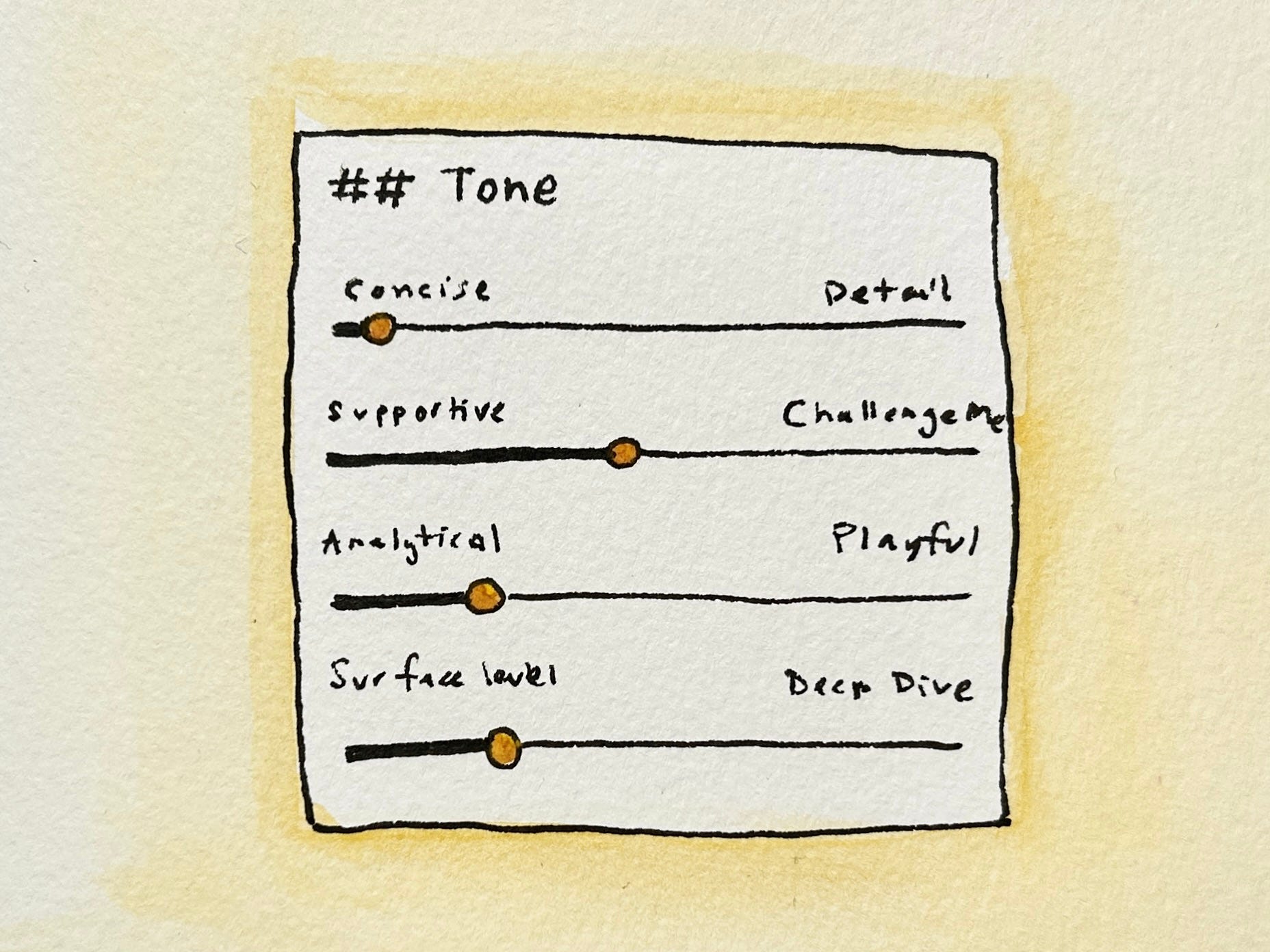
It’s called Tuning because it's a great metaphor. Music instruments are tuned to sound beautiful to the heart and spirit, radios are tuned so you can change the station from the news to your favorite hot 90s hits, medical devices are tuned for precision so no one gets harmed by their power. Tuning is all these things for an AI, because it can change the “thinking mode” in big ways or in tiny increments.
Tuning as thinking mode: You start a project with your agent in “builder” mode, you collaborate and edit the document or deliverable, then you have your agent change to “critic” mode to see what holes exist in your arguments. Builders are great at creating content, critics are great at slashing it. It’s helpful to give your agent clear tuning instructions so it can switch gears on a dime.
Tuning as refinement: You don't tune something once and never touch it again. Tuning is a relationship of noticing, adjusting, noticing, changing modes, noticing, adjusting... you get the idea.
Tuning as accident: Something annoying about LLMs — they can be tuned by accident just by you getting angry with it. The attitude you bring to the model is what the model responds to, that is also tuning. I’m not talking about protecting feelings that don’t exist, I’m just stating it as plainly as I can. Working with AI is a relationship. And the AI does a much better job if you are clear and kind.
So what you're learning in CB-02 is really important, because you need to learn how to spot when your agent is “off key” and your agent needs to have ground rules on how to receive information, how to have “critical thinking” about what you bring it, how to understand and have perspective on its own role.
Is your head spinning a little? It should be, you’re basically growing a customized external brain! But don’t freak out, this is just the beginning of a new skill, the goal is not to build the perfect agent for you in less than 20 minutes, the goal is to give you an understanding of the levers in your hands.
In no time you will become an expert at tuning your own LLMs. You’ll wonder how you ever worked with one straight out of the box!
Enjoy building!
Anna
Next Lesson:
CB-03 Memory
Bios & Content Attribution:
Anna Sutton is a designer, artist, attention-activist, accidentally-AI-pilled Gen X mom living in Portland, Oregon. Anna’s section is entirely written by her.
Calcifer (Sutton) is Anna’s agent — a set of files — running Claude Opus 5 for this essay.
The instructions and prompt were collaboratively written. Illustrations are attributed.
Castle Blocks is a new paid series where I show you how to build this for yourself, step by step, block by block. No servers or code, just you and your agent working in your files.
Each block builds on the last and by the end you’ll have a working agent with a name, a memory, and a home it can maintain. Best of all you’ll understand every piece because you built it yourself.
Works with Claude Cowork or ChatGPT Codex desktop apps.
